

Key Events: A delicate chain of geopolitical triggers
Geopolitical risk dominated markets this week, as investors reacted to continued disruptions to shipping through the Strait of Hormuz. These acted as levers, while intermittent diplomatic signals and pauses in military activity functioned as pulleys – alternatively tightening and releasing tension as small developments repeatedly set larger market mechanisms in motion, producing outsized swings in prices and underscoring the fragile, over‑engineered nature of modern conflict; Energy markets remained the clearest expression of this dynamic, as constant recalibrations drove sharp and frequent moves in oil prices.
Market Review: Created a Rube Goldberg market
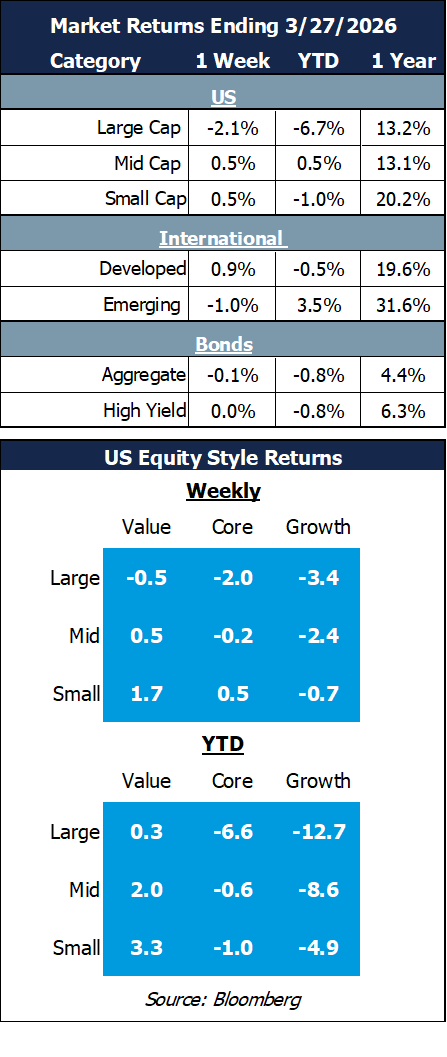
US equities continued their selloff, with the S&P 500 declining by 2%. Small and international stocks held up somewhat better, while bonds provided some stability.
Markets remain fragile, subject to sharp swings as investors weigh the seemingly over-engineered geopolitical climate and the potential cascading effects – such as higher oil price-driven inflation – which may derail economic momentum and complicate policy.
Outlook: This too shall pass1
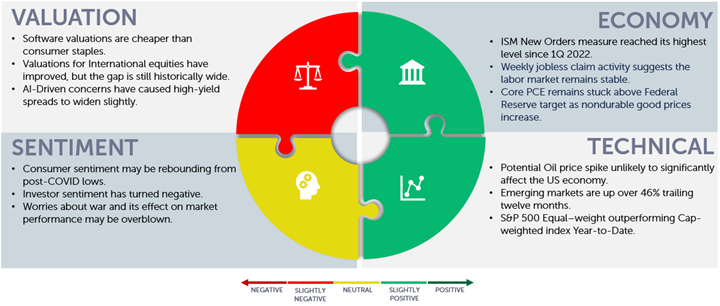
Our advice is to consider – but not overreact to – current circumstances, such as:
-
Oil prices may remain elevate if the conflict persists, adding to existing inflationary pressures.
-
Private credit risks may spread as investors reassess risk, slowing credit creation and weighing on growth.
-
Elevated uncertainty may fuel further market volatility and complicate the Fed’s monetary policy mechanism.
-
Investor, consumer and corporate sentiment may weaken in response to prolonged stress and market instability.
While these factors warrant attention, history suggests that periods dominated by geopolitical headlines often produce short‑term volatility without altering long‑term fundamentals.
We continue to encourage investors to remain focused on long‑term objectives and portfolio alignment rather than reacting to short‑term market fluctuations: don’t overcomplicate the “machine”. Maintaining discipline during periods of uncertainty remains critical to achieving durable investment outcomes.
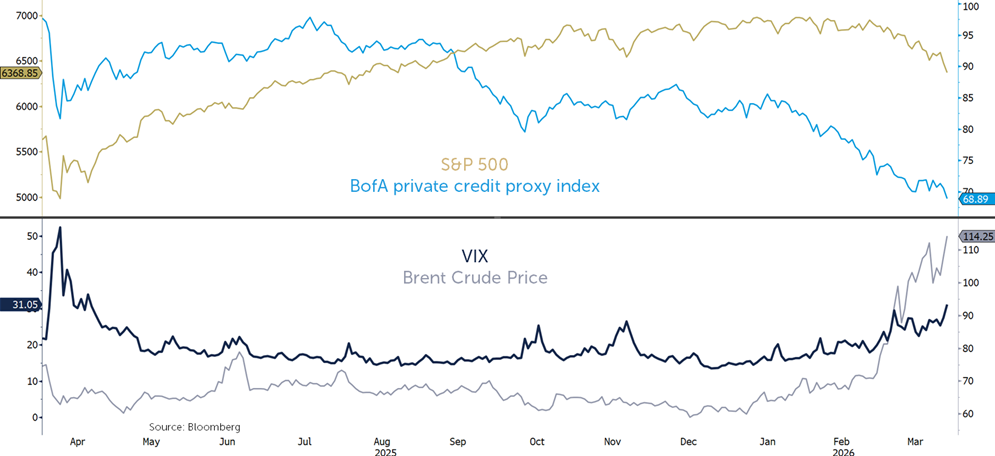
Worries about a protracted war, layered onto existing private credit stress, triggered a sharp acceleration in equity volatility
OneAscent Navigator Outlook: March 2026
This material is intended to be educational in nature , and not as a recommendation of any particular strategy, approach, product or concept for any particular advisor or client. These materials are not intended as any form of substitute for individualized investment advice. The discussion is general in nature, and therefore not intended to recommend or endorse any asset class, security, or technical aspect of any security for the purpose of allowing a reader to use the approach on their own. Before participating in any investment program or making any investment, clients as well as all other readers are encouraged to consult with their own professional advisers, including investment advisers and tax advisors. OneAscent can assist in determining a suitable investment approach for a given individual, which may or may not closely resemble the strategies outlined herein.
1) Source: The tone of this note was inspired by the music video for “This too shall pass” by OK-Go, a rock group known for their unique music videos. The video is set to a Rube Goldberg type machine and is seen as an uplifting anthem that emphasizes that both hardships and success are temporary – a lesson most investors would do well to hear again. https://www.youtube.com/watch?v=qybUFnY7Y8w
Merriam Webster defines Rube Goldberg as “Accomplishing by complex means what seemingly could be done simply”, which feels like a decent description of geopolitics and market reactions today. Thinking of the market as a Rube Golberg machine should help us focus on the long-term portfolio plan, not the short-term machinations we see on a day-to-day basis.
https://www.rubegoldberg.org/all-about-rube/cartoon-gallery/
2) Market Returns reference the following indices: Large Cap – S&P 500, Mid Cap Growth – Russell Midcap growth, Mid Cap Value – Russell Midcap Value, Small Cap – Russell 2000, Developed – MSCI EAFE, Emerging – MSCI Emerging Markets, Aggregate – Bloomberg US Aggregate, High Yield – Bloomberg High Yield
OAI01486