

Key Events: The Fed starts hiking rates
Chair Warsh recently warned the Fed “has more work to do.” On Wednesday the Fed acted, raising rates a quarter point to 3.75%–4.00% in a unanimous 12-0 vote — the first hike since 2023 — with a statement that inflation “is too high and has been for too long.” August CPI rose 0.4% for the month as energy costs tied to the Middle East continue to pressure prices.
Warsh framed the move as removing “a dose of accommodation” rather than restricting, and the projections carried that message: the Fed expects just one more hike this year.1
Market review: A historic 5% yield
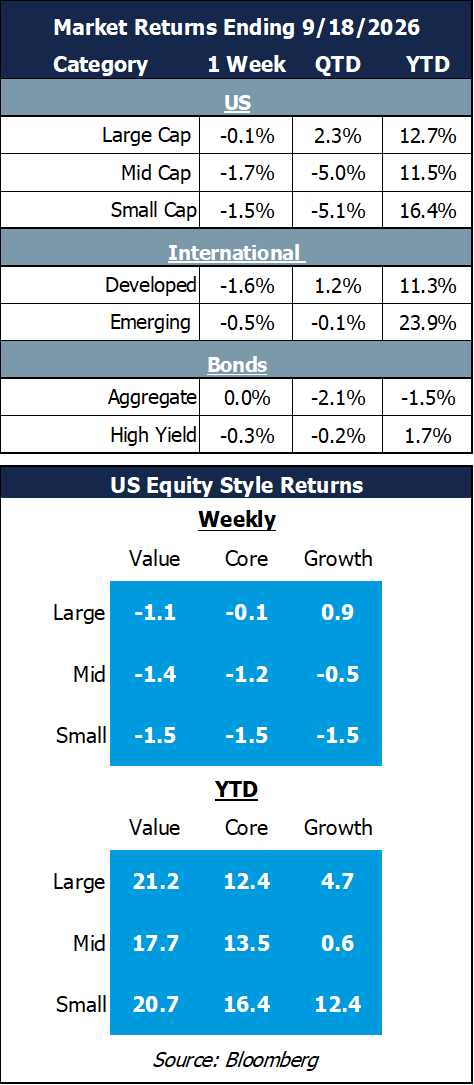
The 10-year Treasury yield hit 5%, its highest yield since 2023; fear of increased interest burden caused small caps to lag. Larger companies absorbed the hike better, if unevenly. Large-cap tech gained and the S&P 500 held just above water. Overseas, returns were slightly negative as energy and inflation pressures hit harder with less tech-driven gains.
Outlook: A Fed path with little margin for error
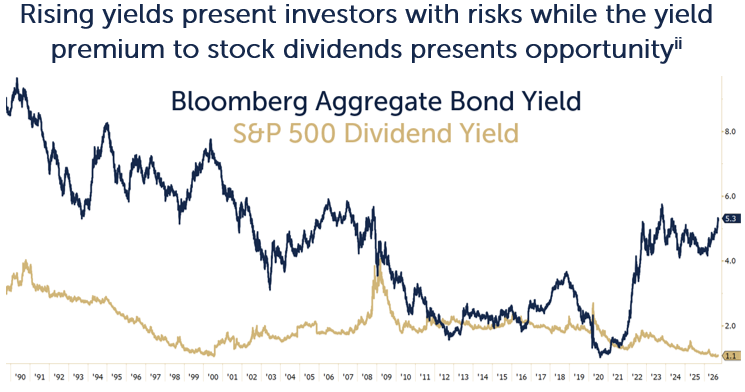
The Fed has committed to a tightening path, raising rates at least once more, and bond yields at 5% reflect this reality; it raises the return hurdle for every asset, competes directly with stocks for capital, and lifts borrowing costs for households and companies alike.
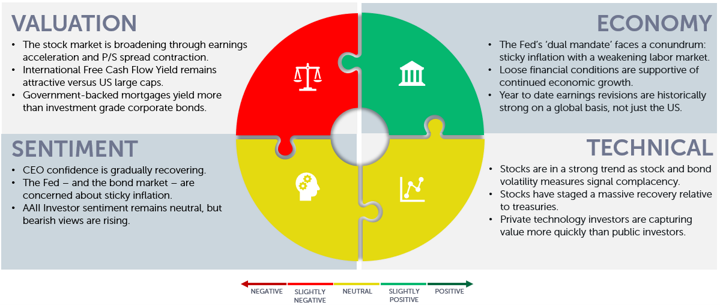
While Fed’s the margin for error is narrowing, the second risk we have noted – stalling earnings momentum – looks contained: Q2 earnings were the best since 2021 with broad participation across sectors, and guidance has stayed constructive. Broad growth is harder to break than a narrow rally.
What this means for you: the environment has shifted from one where we wonder whether rates will rise to thinking about how high they might go. They may go up more than we expect, which is a reason for discipline, not prediction – rates are unpredictable given higher Iran-related energy costs driving inflation today. This uncertainty suggests that investors remain diversified across asset classes, sectors, and geographies. Rebalance back to targets rather than chase recent winners. Remember higher yields are not only a headwind — they also mean bonds are paying attractive yields. Good stewardship looks more like consistency than an attempt to outsmart the market.
OneAscent Navigator Outlook: September 2026
This material is intended to be educational in nature, and not as a recommendation of any particular strategy, approach, product or concept for any particular advisor or client. These materials are not intended as any form of substitute for individualized investment advice. The discussion is general in nature, and therefore not intended to recommend or endorse any asset class, security, or technical aspect of any security for the purpose of allowing a reader to use the approach on their own. Before participating in any investment program or making any investment, clients as well as all other readers are encouraged to consult with their own professional advisers, including investment advisers and tax advisors. OneAscent can assist in determining a suitable investment approach for a given individual, which may or may not closely resemble the strategies outlined herein.3
1) Source: Bloomberg, Federal Reserve
2) Source: Bloomberg
3) Market Returns reference the following indices: Large Cap – S&P 500, Mid Cap Growth – Russell Midcap growth, Mid Cap Value – Russell Midcap Value, Small Cap – Russell 2000, Developed – MSCI EAFE, Emerging – MSCI Emerging Markets, Aggregate – Bloomberg US Aggregate, High Yield – Bloomberg High Yield
OAI01615