

Key Events: Bad jobs data, good news for the Fed
The economy lost 23,000 jobs in July taking pressure off the Fed to raise rates; additionally, the labor force participation rate fell to 61% – the lowest reading since the peak of the COVID-19 pandemic – and prior months’ payrolls were revised downward.1
Market review: Good for the Fed, good for markets
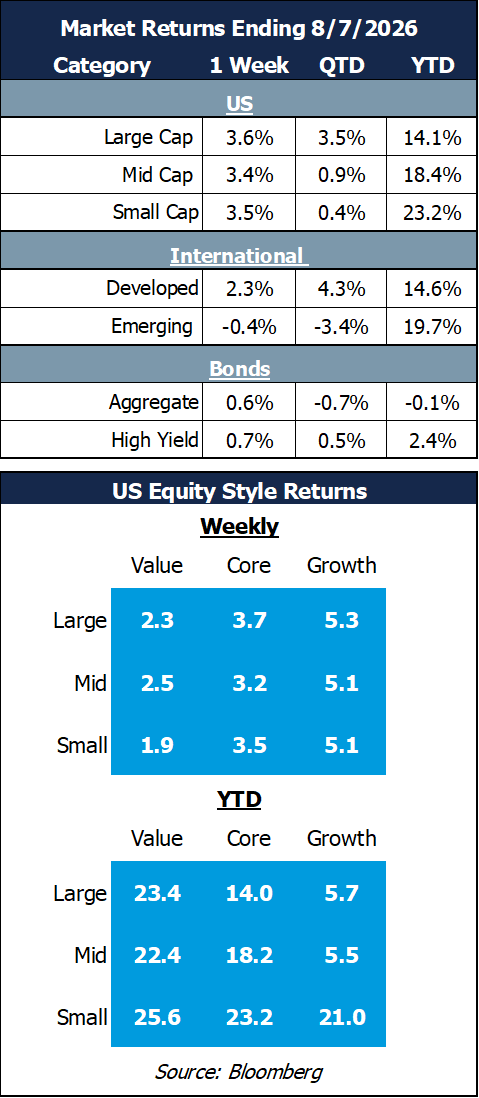
This reduced pressure on the Fed caused stock markets to soar: the S&P 500 had its best week since April, bonds were happy with the news as well. Only emerging markets stocks pulled back slightly, as the heavily semiconductor focused markets took a pause.2
Outlook: How AI drives broader economic growth
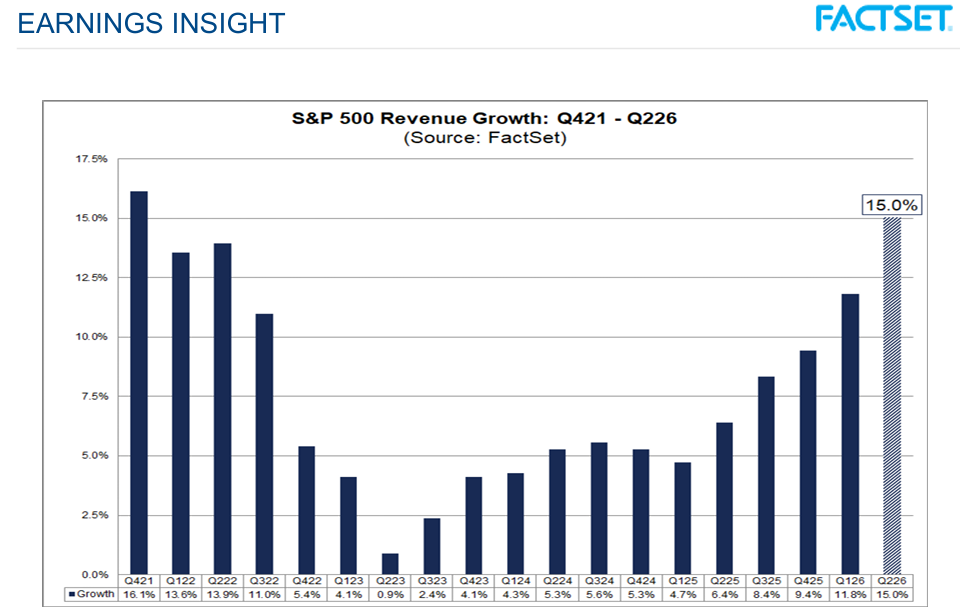
Beneath the headline return numbers sits a quieter engine. The largest cloud providers are on pace to spend north of $700 billion on capital projects this year3, and that spending does not stay in Silicon Valley. It moves through chipmakers and equipment suppliers, then out to the electricians, turbine manufacturers, utilities, cooling specialists, and construction firms building and powering the data centers. You can see it in the revenue line; FactSet data show S&P 500 revenue growth accelerating for five consecutive quarters, from 4.7% in the first quarter of 2025 to an estimated 15.0% this quarter, the strongest pace since the post-pandemic reopening4. What makes this important is this looks like real volume, not just higher prices. One firm’s capital budget is another firm’s revenue, and that revenue is reaching industries with little direct connection to artificial intelligence.
It also helps explain how the economy can shed jobs and still expand. The open question, and the one we watch most closely, is whether accelerating revenue converts into durable profitability across the broader corporate sector rather than a narrow group of suppliers. Capital spending of this scale eventually arrives as depreciation, so the buildout has to earn its keep. That is the right test, and it is a reminder that our calling is to steward capital through the full cycle, not merely the exciting part of it.
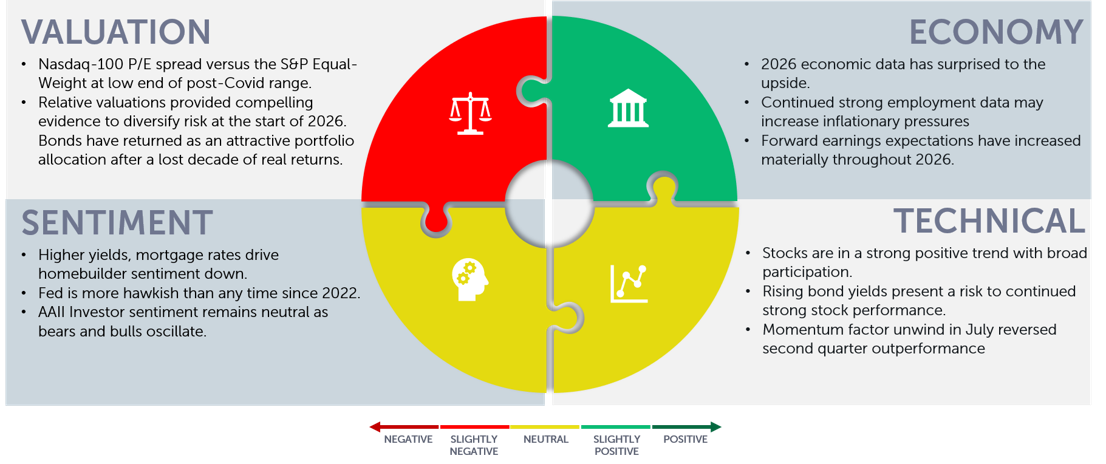
As always, we counsel diversification with, likely, less reliance on the Mag7 and technology broadly for returns; we urge clients to remain diversified, with the trailing returns in support of our thesis.
Revenues soar as hyperscalers drive economic growth
OneAscent Navigator Outlook: August 2026
This material is intended to be educational in nature, and not as a recommendation of any particular strategy, approach, product or concept for any particular advisor or client. These materials are not intended as any form of substitute for individualized investment advice. The discussion is general in nature, and therefore not intended to recommend or endorse any asset class, security, or technical aspect of any security for the purpose of allowing a reader to use the approach on their own. Before participating in any investment program or making any investment, clients as well as all other readers are encouraged to consult with their own professional advisers, including investment advisers and tax advisors. OneAscent can assist in determining a suitable investment approach for a given individual, which may or may not closely resemble the strategies outlined herein.5
1) Source: Bureau of Labor Statistics Employment Situation Summary – 2026 M07 Results
2) Source: Bloomberg
3) Source: Tom’s Hardware capex spending to hit $725 billion in 2026, up 77% from last year | Tom’s Hardware
4) Source: FactSet
5) Market Returns reference the following indices: Large Cap – S&P 500, Mid Cap Growth – Russell Midcap growth, Mid Cap Value – Russell Midcap Value, Small Cap – Russell 2000, Developed – MSCI EAFE, Emerging – MSCI Emerging Markets, Aggregate – Bloomberg US Aggregate, High Yield – Bloomberg High Yield
OAI01597